Delays, half-measures and bad enforcement are hurting Ukraine’s cause
Journal Article — 2 November 2023
“Delays, half-measures and bad enforcement are hurting Ukraine’s cause,” by Anna Romandash and David Cortright, Eurativ, (2 November 2023).


“Delays, half-measures and bad enforcement are hurting Ukraine’s cause,” by Anna Romandash and David Cortright, Eurativ, (2 November 2023).
Made possible with support from the European Union, the Swiss Federal Department of Foreign Affairs, The Netherlands Ministry of Foreign Affairs, and the German Federal Foreign Office, the Securing the Future Initiative (a project of The Soufan Center and the Fourth Freedom Forum) launched in September 2021 on the occasion of the twentieth anniversary of the 9/11 attacks.
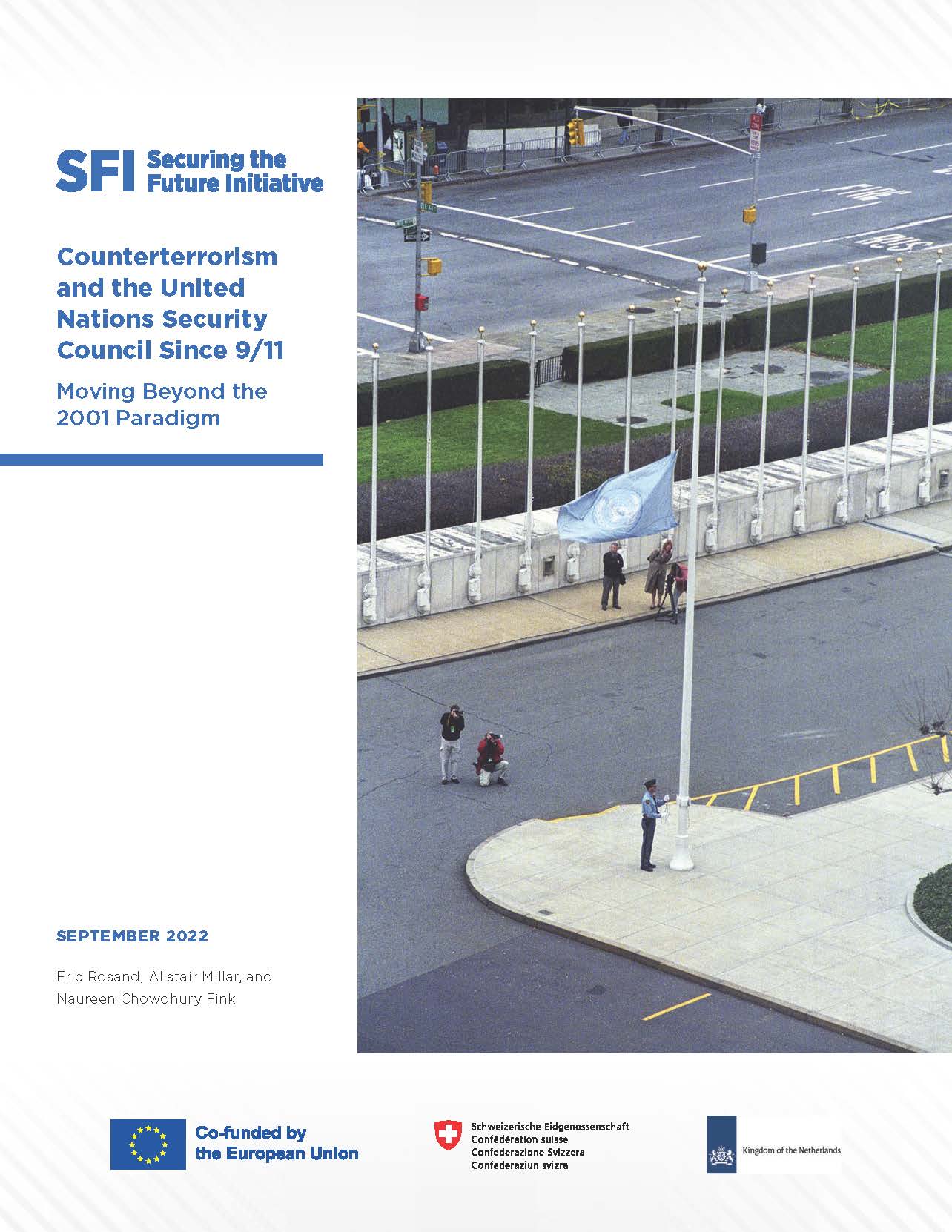
This report provides an independent review and assessment of the United Nations Security Council’s counterterrorism activities over the past two decades. The report’s findings and recommendations are informed by desk research, surveys, and numerous off-the-record interviews with experts and practitioners, and the authors’ combined experience of working on multilateral counterterrorism issues for more than 50 years.
“Five Goals For Ethical Post-sanctions Peacebuilding,” by George A. Lopez and Beatrix Geaghan-Breiner, Peace News, (September 2022).
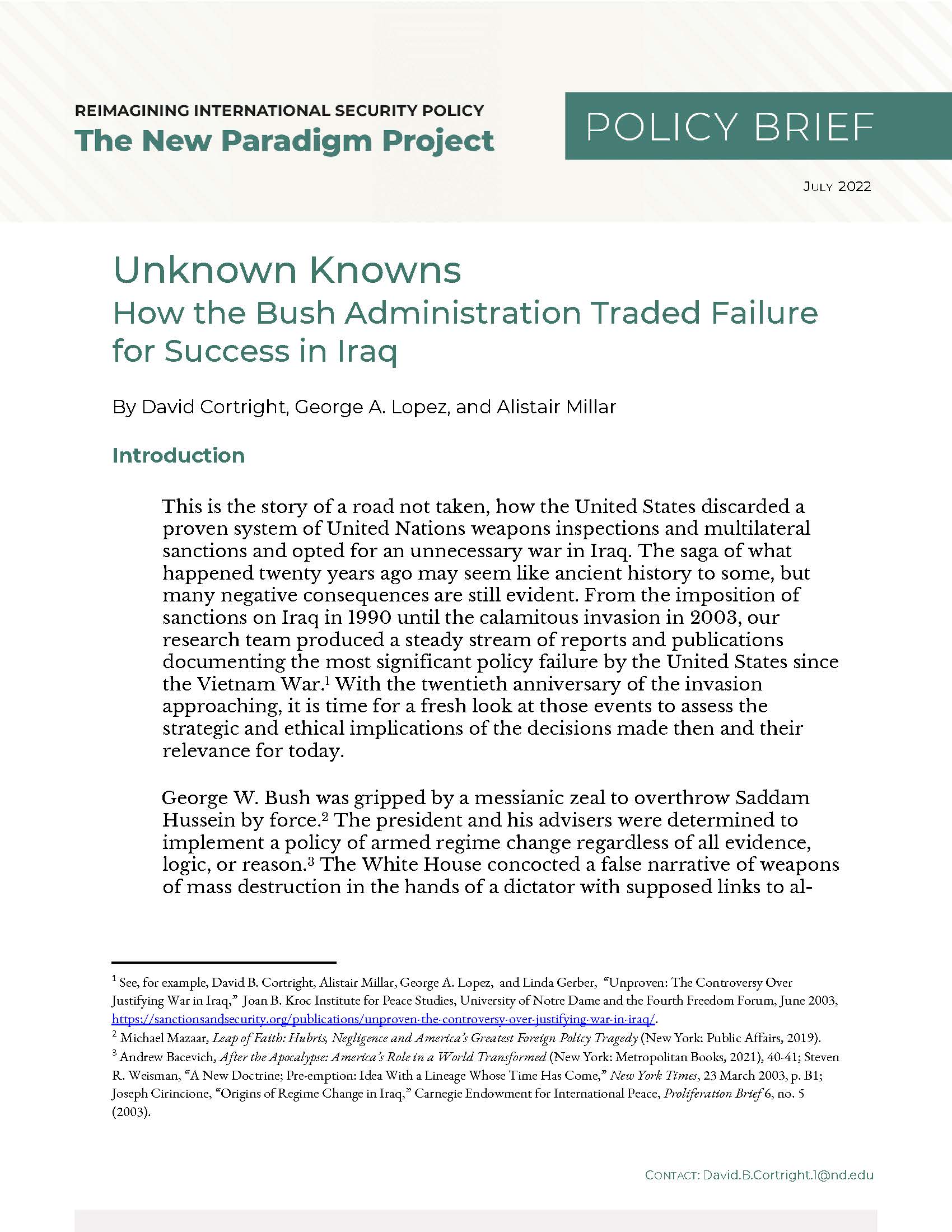
This study by the Fourth Freedom Forum’s New Paradigm Project examines the alternative security approaches that were available at the time of the U.S. invasion of Iraq in 2002, and examines alternatives to document that the war was unnecessary and to highlight the policy advantages of multilateral nonmilitary security strategies.
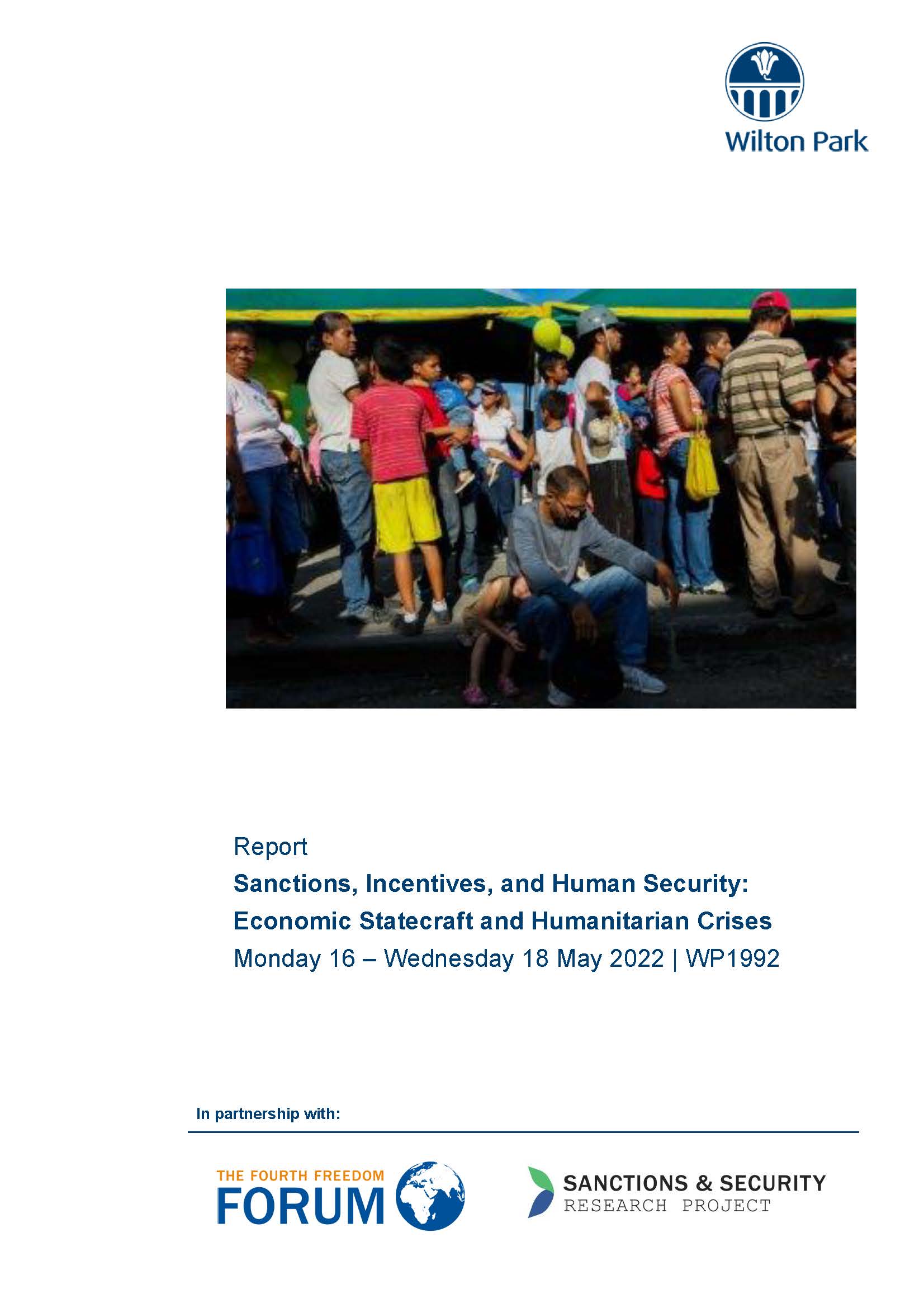
Proceedings from a sanctions conference on Sanctions, Incentives, and Human Security: Economic Statecraft and Humanitarian Crises; hosted at Wilton Park from 16-18 May 2022 in partnership with the Fourth Freedom Forum and the Sanctions and Security Research Project.
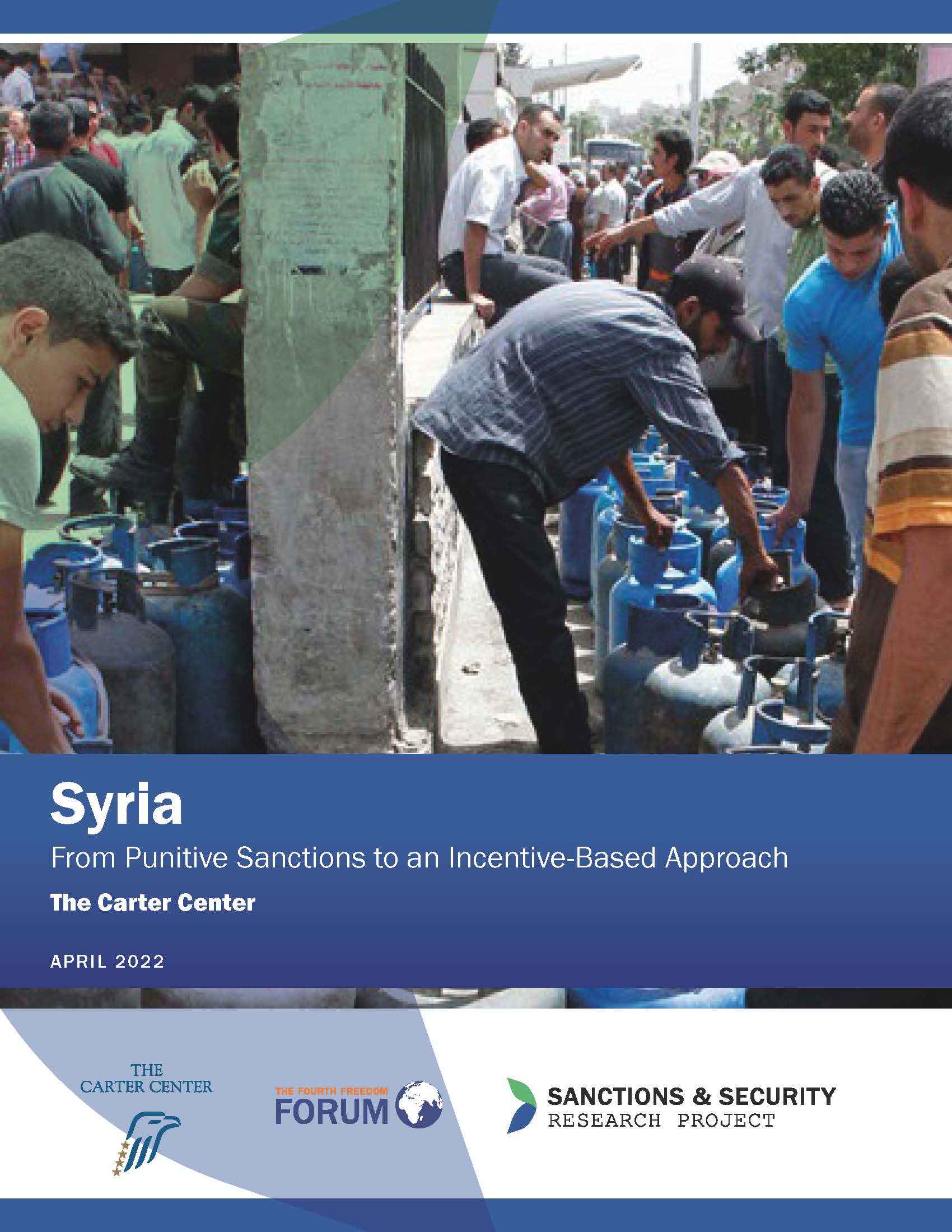
To fully scrutinize the humanitarian impact of sanctions, the Sanctions and Security Research Project commissioned case studies on Iran and Venezuela, and collaborated with the Carter Center’s project on Syria, which recommend stronger safeguards to prevent negative humanitarian impacts and offer ways of improving the effectiveness of sanctions and strengthening of incentives.
This paper is a compilation of the Carter Center’s work on Syria prepared by Hend Annie Charif, program associate in the Carter Center’s Conflict Resolution Program, with contributions by Stacia George, director of the conflict resolution program, Rana Shabb, associate director in the conflict resolution program, Nancy Azar, senior program associate to the conflict resolution program, and Hrair Balian, former director and senior advisor to the conflict resolution program.
“Russia’s war in Ukraine means the end of counterterrorism consensus,” by Eric Rosand and Alistair Millar, The Hill, (6 April 2022).
“How to mix sanctions and diplomacy to avert disaster in Ukraine” by David Cortright and George A. Lopez, The Bulletin of the Atomic Scientists, (1 February 2022).
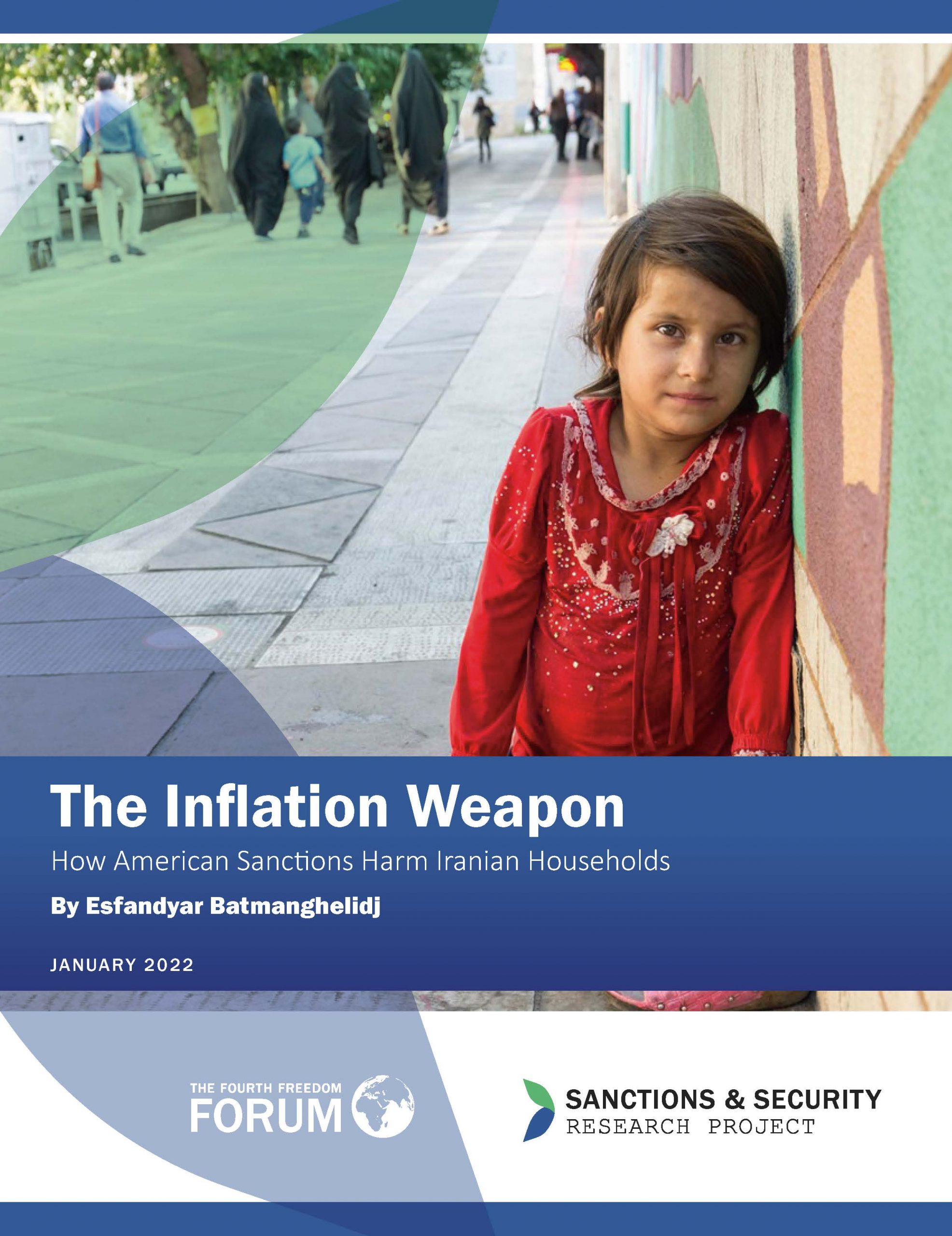
To fully scrutinize the humanitarian impact of sanctions, the Sanctions and Security Research Project commissioned case studies on Iran and Venezuela, and collaborated with the Carter Center’s project on Syria, which recommend stronger safeguards to prevent negative humanitarian impacts and offer ways of improving the effectiveness of sanctions and strengthening of incentives.
This case study on Iran was prepared by Esfandyar Batmanghelidj, CEO of the Bourse & Bazaar Foundation, Visiting Fellow at the European Council on Foreign Relations, and principal member of When Money Can’t Buy Food and Medicine, a project funded by the Swiss Network for International Studies.
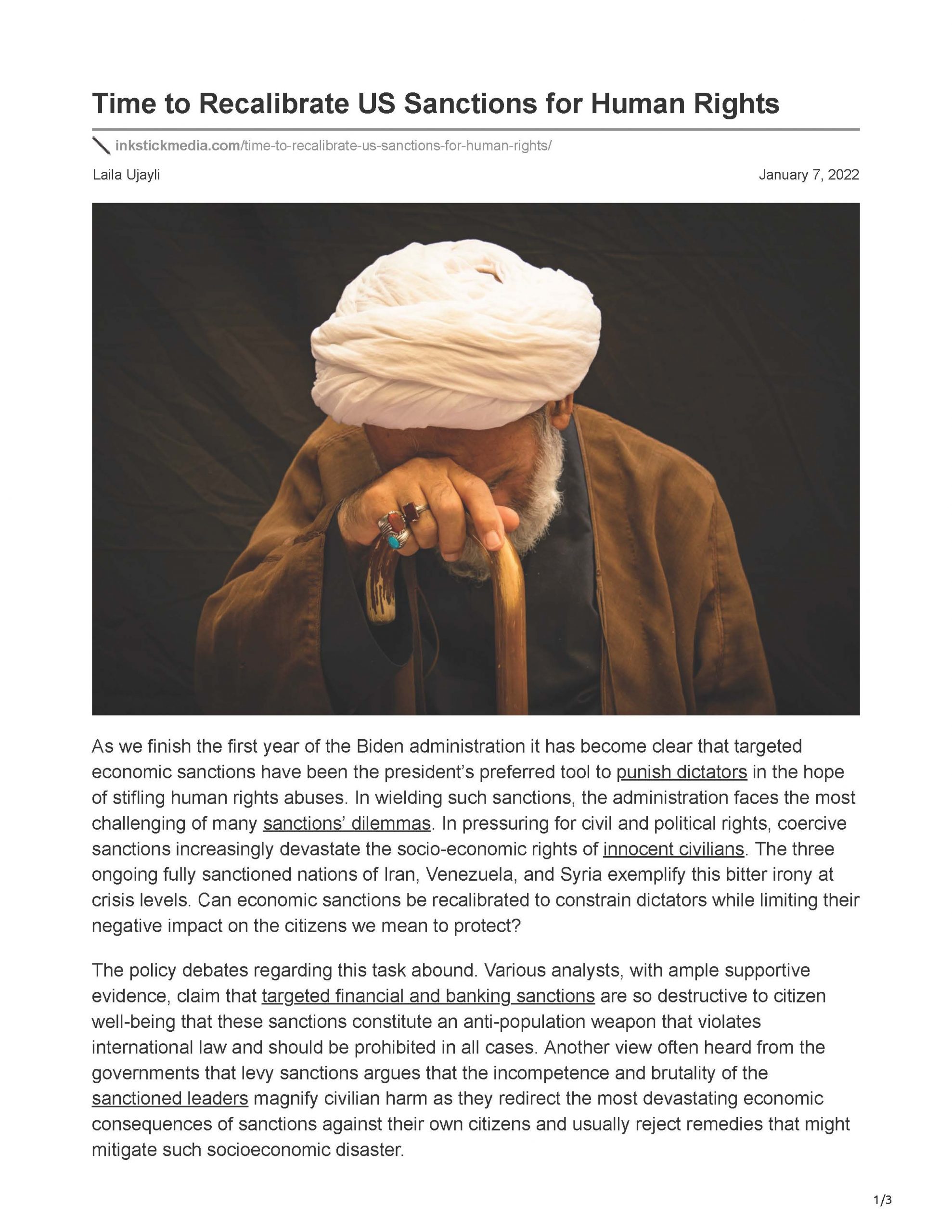
Time to Recalibrate US Sanctions for Human Rights by George A. Lopez, Inkstick Media, (7 January 2022).