End Game? Removing Sanctions in Iraq
Report — May 2003
This paper provides a brief overview of some of the issues associated with the lifting of UN sanctions in Iraq.

This paper provides a brief overview of some of the issues associated with the lifting of UN sanctions in Iraq.
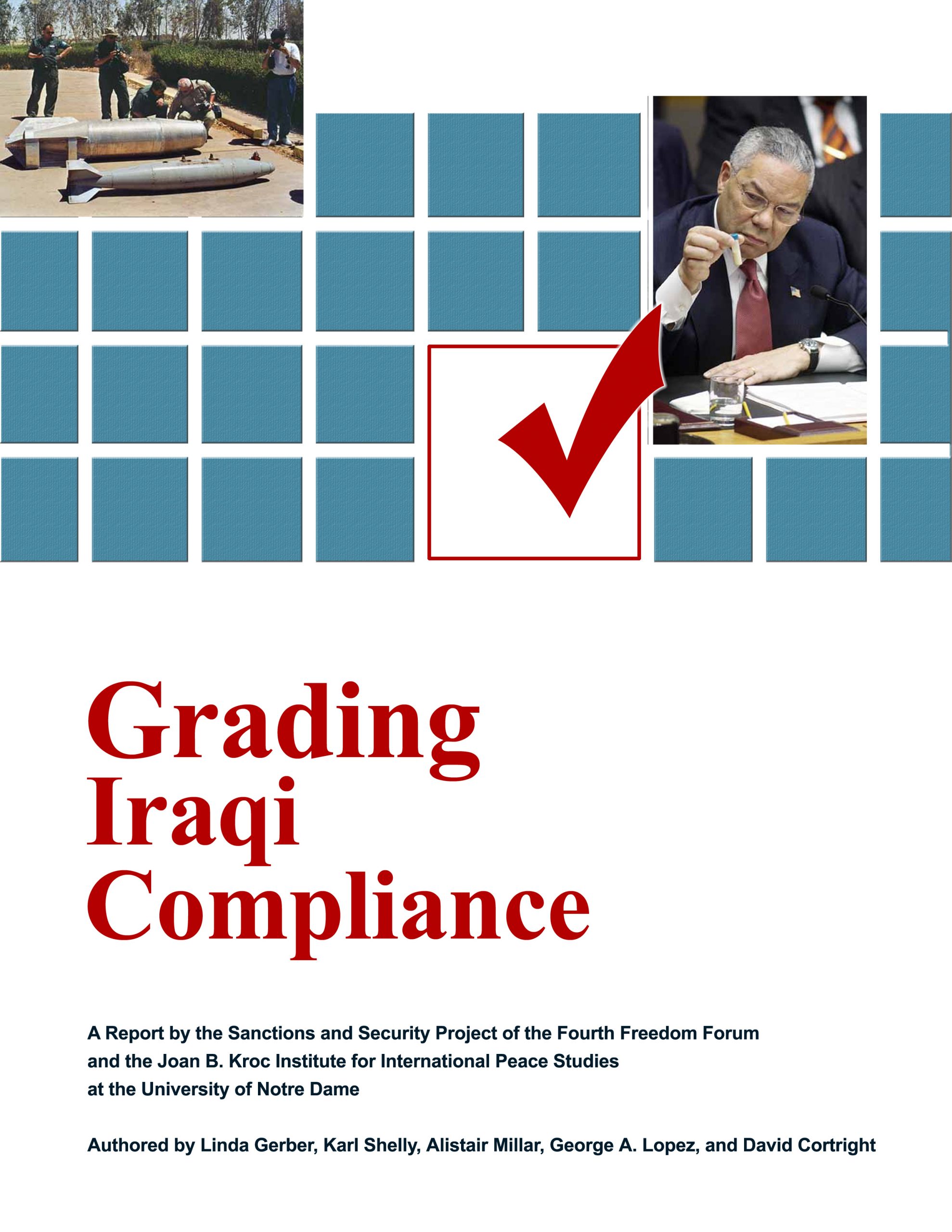
This report devotes special attention to the compliance mandates of Security Council Resolution 1441, passed in November 2002. The authors argue that significant steps toward Iraqi compliance with Security Council demands have occurred, especially with the work of UNMOVIC inspectors since 2002. A chart published in this report showing Iraqi compliance with inspections was reprinted in the New York Times just before the outbreak of the war.
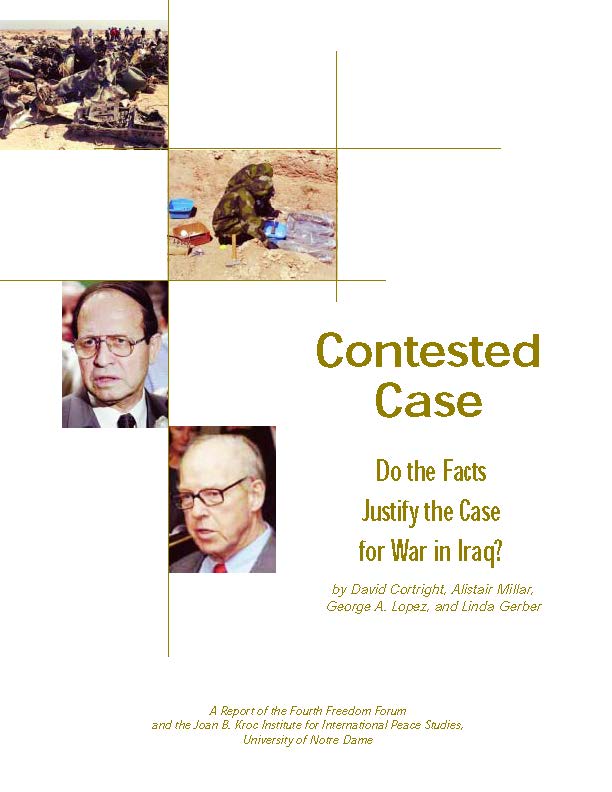
This report examines the key questions being asked by the international community regarding the justification provided for the invasion of Iraq and engaging in regime transition via war in Iraq. The report employs data from a series of earlier reports as it classifies the arguments made by the U.S. and UK governments.
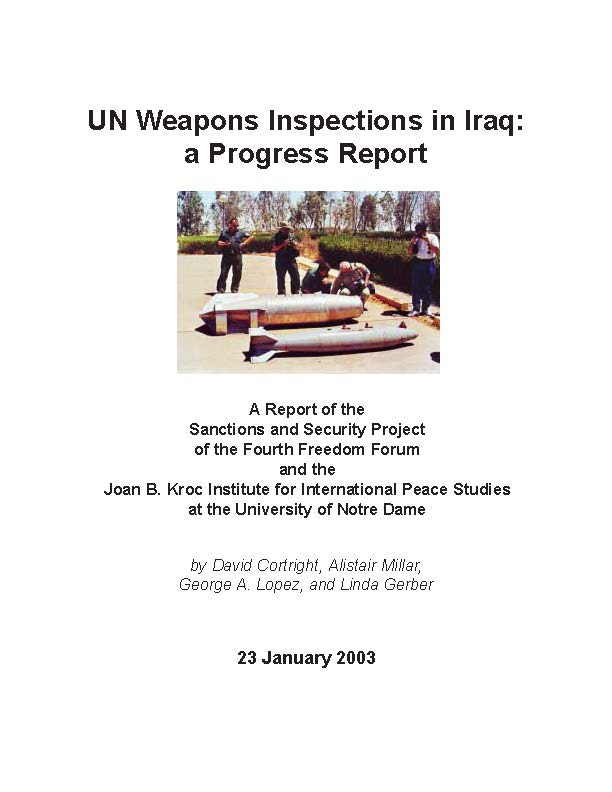
This report provides an assessment of the intensive inspection activity of UN weapons monitors in Iraq, which was mandated in Security Council Resolution 1441 in 2002. Issued just after the January 27 update to the Security Council on UN inspections provided by chief of operations, Hans Blix, the report concurs with Blix’s assessment that “Iraq has on the whole cooperated rather well so far” with UN inspectors.
“Sanctions, Inspections and Containment: Viable Policy Options in Iraq” by David Cortright, Alistair Millar, and George A. Lopez in Iraq: Threat and Response, edited by Gerhard Beestermöller and David Little (LitVerlag, 2003) pp. 127-147.
“A Case for Concern, Not a Case for War,” by Glen Rangwala, Nathanial Hurd, and Alistair Millar in The Iraq War Reader: History, Documents, Opinions, ed. Micah L. Sifry and Christopher Cerf (New York: Simon & Schuster, 2003).
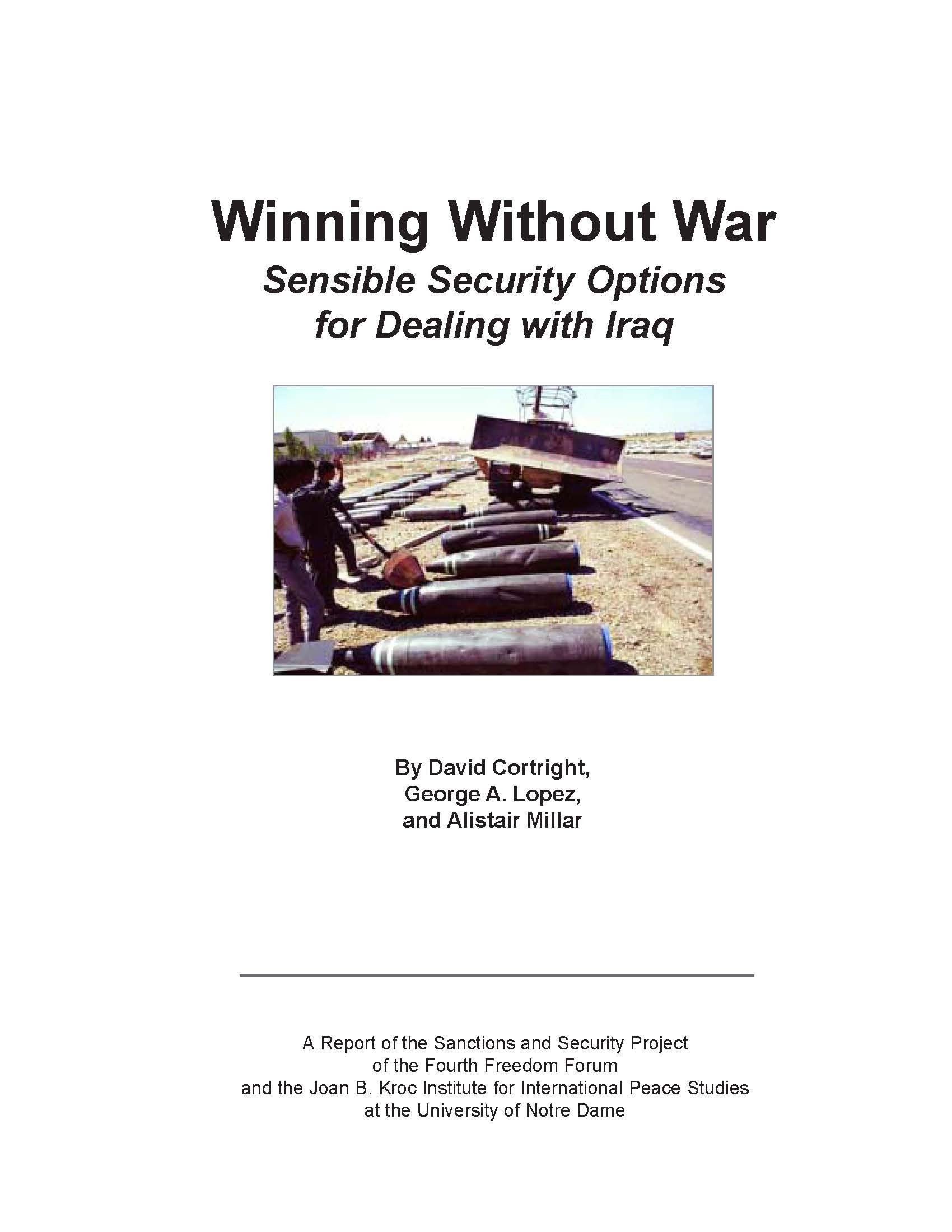
Joint Resolution 114 of the Congress of the United States stipulates that if the president decides to use force he must certify why “diplomatic or other peaceful means” will not adequately meet U.S. interests. This report shows that peaceful and diplomatic options are available and can be successfully implemented to achieve U.S. objectives.
“Disarming Iraq: Nonmilitary Strategies and Options” by David Cortright and George A. Lopez, Arms Control Today, vol. 32, no. 7 (September 2002), pp. 3-7.
This study outlines practical policy options for reducing and containing the Iraqi weapons threat without resort to armed force. It suggests steps for reformulating UN sanctions in Iraq. It proposes a diplomatic bargaining strategy for gaining Iraqi compliance with renewed UN weapons inspections. And it calls for the development of an “enhanced containment” system of financial controls and externally based border monitoring to limit Iraq’s military potential and prevent the regime from acquiring weapons of mass destruction.
This report provides preliminary analysis of what recent arms embargo cases reveal about how to improve the implementation and enforcement of arms embargoes. It also discusses some of the recommendations for arms embargoes formulated at the recently concluded Bonn-Berlin high level meetings on this policy area.